Why Aquatic Weed Removal Matters for Property Owners in Trinidad TX
If you own a pond or small lake in Trinidad TX, you already know how quickly things can get out of hand once weeds start creeping across the surface. What begins as a thin fringe of green along the bank can turn into a dense, tangled mess that chokes out fish, attracts mosquitoes and snakes, and makes your waterfront practically unusable. We see it every season across East Texas, and the truth is that most pond owners wait too long before calling for help. Aquatic weed removal is not just about making your pond look pretty. It is about protecting your investment, preserving water quality, and keeping the entire aquatic ecosystem healthy for years to come. In this guide, we are going to walk you through the problems unchecked vegetation causes, the methods that actually work, and how our team at Arrowhead Pond Restoration delivers long-term weed management solutions right here in Trinidad TX and surrounding communities.
Pond weed removal is one of those jobs that sounds straightforward until you are knee-deep in duckweed, fighting a losing battle with a rake. Invasive aquatic weeds grow fast, reproduce aggressively, and exploit every excess nutrient in your water column. Without a proper weed management plan, you will find yourself repeating the same frustrating cycle year after year. That is exactly why we built our business around integrated pond management, combining vegetation removal with aeration, shoreline restoration, and habitat improvement so the results actually last. Whether you are a rancher trying to keep a stock pond functional, a homeowner who wants a clear swimming area, or part of a homeowners association managing a community lake, aquatic weed control is the foundation of every healthy pond.
Let us dig into what causes these problems and, more importantly, what we can do to solve them.
Understanding the Root Causes of Pond Weed Problems
Before we grab any equipment or mix a single treatment, we always start with aquatic vegetation identification. Not all plants in your pond are bad. Some provide essential fish habitat structure and cover, shade the water to moderate temperature, and support a balanced pond ecosystem. The trouble starts when invasive aquatic plants overwhelm those beneficial species and take over. Knowing the difference between desirable native plants and nuisance vegetation is the first step in every weed management plan we create for property owners in Trinidad TX.
Nutrient Overload and Reduced Water Clarity
The single biggest driver of explosive weed and algae growth is nutrient management, or more accurately, the lack of it. When excess nitrogen and phosphorus enter your pond through fertilizer runoff, livestock waste, decaying leaves, or septic seepage, they create a nutrient load that acts like rocket fuel for invasive aquatic weeds. The result is reduced water clarity, thick mats of algae and pond scum on the surface, and oxygen levels that plummet overnight as all that organic matter decomposes.
We have tested ponds across East Texas where visibility dropped to less than six inches because nutrient loading went unchecked. When water clarity falls that low, sunlight cannot reach beneficial bottom-growing plants, so only surface-choking species thrive. It is a vicious cycle: more weeds produce more decaying material, which dumps more nutrients back into the water, which feeds more weeds.
Here are common nutrient sources we help property owners and landowners identify:
– Agricultural fertilizer runoff from adjacent pastures or crop fields
– Livestock with direct pond access, depositing waste into the water
– Grass clippings and leaf litter blown or washed into the pond
– Failing or poorly placed septic systems
– Waterfowl congregating in large numbers along the shoreline
Addressing the nutrient load is absolutely critical. Without it, every other aquatic weed removal method becomes a temporary fix at best. Our integrated pond management approach always includes a nutrient assessment so we can recommend buffer strips, livestock exclusion fencing, or other practical measures that reduce what is feeding those weeds in the first place.
Cattails, Shoreline Weeds, and Access Problems
One of the most common complaints we hear from landowners around Trinidad TX involves cattails and shoreline weeds. These tough, fast-spreading plants establish dense stands along the bank, making it impossible to fish, launch a kayak, or even walk to the water’s edge. Shoreline usability drops to zero, and so does the enjoyment you should be getting from your property.
Cattails and shoreline weeds also create prime habitat for mosquitoes and snakes, which is a real concern for families with children and pets. The dense vegetation provides standing-water pockets where mosquitoes breed and sheltered corridors where snakes move undetected. We have worked with homeowners associations and ranchers who told us they stopped visiting their ponds entirely because the shoreline felt unsafe.
Shoreline vegetation removal is one of our most requested services, and for good reason. Clearing those overgrown banks restores pond access, improves sightlines so you can spot wildlife hazards, and opens up space for shoreline restoration with native grasses that look attractive without becoming invasive. It is a night-and-day transformation that property owners and landowners notice immediately.
Proven Methods for Effective Aquatic Weed Removal in Trinidad TX
There is no single magic bullet for pond weed control. The right approach depends on the species you are dealing with, the size of your pond, your goals for the property, and your budget. What we have learned through years of pond and lake management in East Texas is that the most effective results come from combining multiple strategies into a cohesive maintenance plan. Here is a breakdown of the primary methods we use and recommend.
Mechanical and Manual Weed Removal
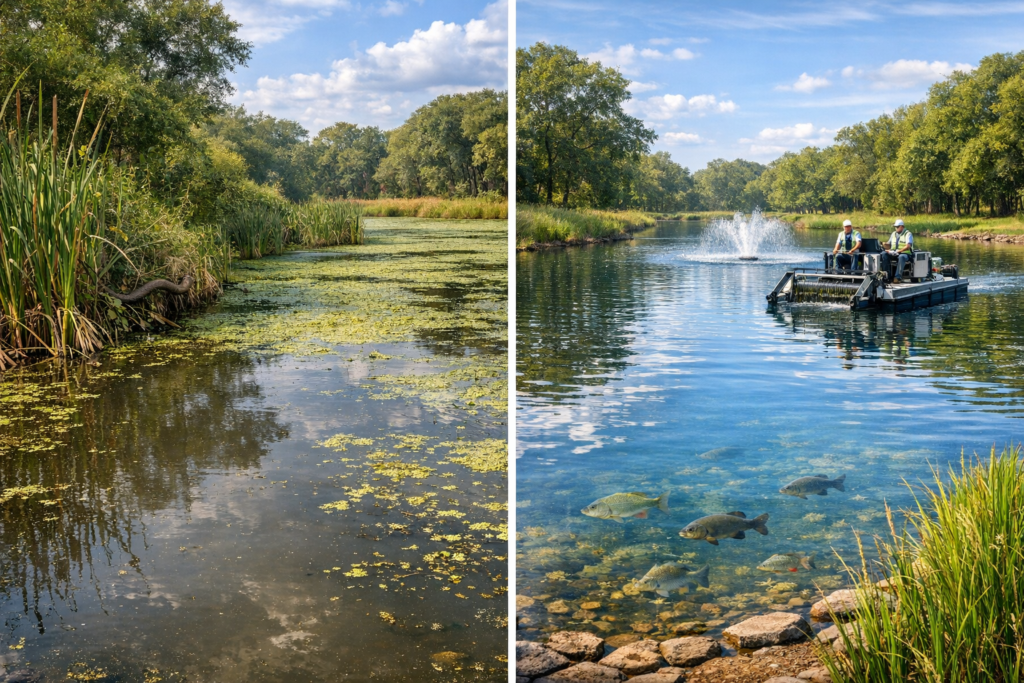
For immediate, visible results, mechanical weed removal is hard to beat. We use specialized mechanical weed harvesters and mechanical removal equipment to physically cut, rake, and extract vegetation from ponds and lakes. This approach is particularly effective for large infestations where you need to restore open water quickly.
Manual weed removal still has its place too, especially in smaller ponds or sensitive areas where heavy equipment could damage the bank or disturb fish spawning beds. Our crews hand-pull rooted weeds, rake floating mats, and clear debris from intake structures and docks. It is labor-intensive, but in certain situations it is the most precise form of vegetation removal available.
Benefits of mechanical and manual approaches:
– Immediate reduction in weed biomass
– No chemical residues in the water
– Removed plant material does not decompose in the pond, so nutrient load decreases
– Improves water clarity and pond access within days
The limitation is that mechanical weed removal alone does not prevent regrowth. Roots, fragments, and seeds remain in the sediment, ready to sprout again. That is why we always pair physical removal with follow-up treatments and preventive strategies as part of a comprehensive weed management plan.
Aquatic Herbicides and Pond-Safe Chemicals
When used correctly, aquatic herbicides are a powerful tool in the aquatic weed control toolbox. We apply EPA-registered, pond-safe chemicals that target specific weed species without harming fish, livestock, or people who use the water. The key is proper aquatic vegetation identification before any product goes in. Applying the wrong herbicide to the wrong species wastes money and can damage the balanced ecosystem you are trying to protect.
Our licensed applicators follow strict label requirements and state regulations for every treatment. We also time applications carefully because treating too large an area at once can cause a massive die-off of plant material that depletes oxygen levels and triggers a fish kill. Controlled, staged treatments with careful monitoring of water quality are always part of our protocol.
We commonly use aquatic herbicides to address:
– Submerged species like hydrilla, coontail, and Eurasian watermilfoil
– Floating species like duckweed and water hyacinth
– Emergent species like cattails and shoreline weeds
– Algae and pond scum that resist mechanical methods
Professional weed control means knowing exactly what to apply, how much, and when. It is not something we recommend property owners attempt with off-the-shelf products without expert guidance, because the margin for error is slim and the consequences for aquatic ecosystem health can be severe.
Pond Aeration Systems and Fountain Solutions
We are passionate about pond aeration systems because they address one of the core drivers of weed and algae problems: low oxygen levels. When a pond lacks adequate dissolved oxygen, nutrient-rich muck builds up on the bottom, water quality suffers, and conditions become ideal for invasive aquatic plants to dominate.
Fountain and aeration systems work by circulating water and increasing the oxygen exchange at the surface. Bottom-diffused aeration pulls low-oxygen water from the deepest zones and exposes it to the atmosphere, promoting aerobic decomposition of organic sediment. Surface fountains add oxygen while also providing a beautiful visual element that many property owners love.
The results speak for themselves:
– Improved water clarity as suspended particles settle in well-oxygenated water
– Reduced muck accumulation, which means less fuel for weed growth
– Better fish growth and health, since game fish thrive in oxygen-rich environments
– A more balanced pond ecosystem where no single species dominates
– Fewer algae blooms and less pond scum on the surface
We design and install fountain and aeration systems tailored to the specific size, depth, and shape of each pond. For many of our clients in Trinidad TX and the broader East Texas region, adding aeration has been the single most impactful investment they have made in long-term weed management. It does not replace aquatic weed removal, but it dramatically reduces how often you need it.
Building a Long-Term Weed Management Plan for Your Pond
Aquatic weed removal is not a one-time event. If that is all you do, you are going to be back in the same situation next summer. Our philosophy at Arrowhead Pond Restoration is built around integrated pond management, which means addressing every factor that contributes to weed growth and creating a maintenance plan that keeps your pond healthy year-round. Here is what that looks like in practice.
Shoreline Restoration and Habitat Improvement
A well-designed shoreline is your first line of defense against nuisance vegetation. Shoreline restoration involves reshaping eroded banks, planting native grasses and low-growing ground cover, and installing buffer zones that filter runoff before it reaches the water. These steps directly reduce the nutrient load entering your pond, which slows weed and algae growth at the source.
At the same time, we focus on fish habitat improvement by installing structure like brush piles, rock reefs, and native plantings in designated areas. Fish habitat structure and cover gives bass, bluegill, and catfish the shelter they need while concentrating vegetation in zones where it benefits the ecosystem rather than choking it. Healthy fish populations also help with aquatic weed control naturally, since certain species like grass carp graze on submerged plants.
Shoreline restoration transforms ugly, eroded, weed-choked banks into clean, stable, accessible waterfront. It improves shoreline usability, enhances wildlife habitat, and dramatically improves the overall appearance of your property. For homeowners associations and ranchers who depend on good-looking, functional ponds, this service is a game changer.
Pond Dredging and Sediment Management
Over time, decaying vegetation, silt, and organic matter accumulate on the bottom of every pond. This sediment layer is packed with nutrients that feed the next generation of weeds. When the muck gets deep enough, it reduces pond depth, warms the water, and creates ideal conditions for invasive aquatic weeds to root and spread.
Pond dredging removes that accumulated sediment, restoring depth, improving water quality, and eliminating the nutrient-rich seedbed that fuels weed growth. We use pond dredging strategically as part of our broader restoration plans, especially on older ponds in the Trinidad TX area that have not been maintained in decades.
Pond dredging is a bigger investment than routine vegetation removal, but for severely degraded ponds it can be the most cost-effective path to long-term results. Combined with pond aeration systems and ongoing pond maintenance services, dredging resets the clock on your pond’s health and gives every other management tool a better chance of working.
Ongoing Pond Maintenance Services
The most successful ponds we manage are the ones where property owners commit to a regular maintenance plan. Our pond maintenance services include scheduled inspections, water quality testing, seasonal herbicide applications, aeration system maintenance, and vegetation monitoring. We catch problems early, adjust our approach as conditions change, and keep your pond in peak condition without you having to think about it.
Here is what a typical annual maintenance plan from our team includes:
– Spring assessment with aquatic vegetation identification and early-season treatment
– Summer monitoring for algae and pond scum, with targeted aquatic herbicides as needed
– Fall nutrient management review, including buffer zone maintenance and debris removal
– Winter equipment checks on fountain and aeration systems
– Year-round access to our pond and lake restoration specialists for questions or concerns
East Texas pond weed removal is not a set-it-and-forget-it proposition. Our climate, with its warm temperatures, abundant rainfall, and long growing season, means that invasive aquatic plants never really stop trying to take over. Professional vegetation removal on a scheduled basis is the only reliable way to stay ahead of the problem.
Why East Texas Property Owners Trust Arrowhead Pond Restoration
We are not a national franchise with a one-size-fits-all approach. We are pond and lake restoration specialists who live and work right here in East Texas. We understand the soil, the water, the weather patterns, and the specific invasive species that cause problems in Trinidad TX and neighboring communities. That local knowledge makes a real difference in the results we deliver.
Our team has helped hundreds of property owners and landowners reclaim ponds that were written off as hopeless. We have restored water clarity in stock ponds so thick with algae that ranchers could not see the bottom. We have cleared cattails and shoreline weeds from community lakes so families could actually enjoy their waterfront again. We have designed integrated pond management programs for landowners who wanted trophy bass fisheries with crystal-clear water and thriving wildlife habitat.
What sets us apart:
– Licensed, experienced applicators for all aquatic herbicides and pond-safe chemicals
– Full-service capabilities including lake weed removal, pond dredging, aeration, and shoreline restoration
– Custom weed management plans tailored to your pond’s specific conditions and your goals
– A commitment to aquatic ecosystem health and a balanced ecosystem, not just quick cosmetic fixes
– Transparent pricing and honest recommendations, every time
Lake weed removal, pond weed control, fish habitat improvement, nutrient management, professional weed control, whatever your pond needs, we have the tools and the expertise to make it happen. Our passion is helping people fall in love with their ponds again, and we take that personally.
If you are tired of fighting weeds on your own, or if your pond has reached a point where you are not sure where to start, we are here to help. Aquatic weed removal done right can transform your property, boost your water quality, improve fish growth and health, and give you back the shoreline you have been missing.
Reach out to us today at Arrowhead Pond Restoration to schedule a free pond assessment. We will visit your property, identify what is growing, evaluate your water clarity and oxygen levels, and put together a customized plan that fits your budget and your vision. Do not let another season go by watching your pond disappear under a blanket of weeds. Let our East Texas pond weed removal experts show you what is possible.