What Causes That Stubborn Green Water in Navarro County TX Ponds
If you have ever walked out to your backyard pond only to find it looking like a bowl of pea soup, you are not alone. Across Navarro County TX and the broader East Texas region, pond owners battle green water year after year without understanding what is truly happening beneath the surface. That persistent green haze is almost always the result of unchecked algae blooms fueled by excess nutrients, warm temperatures, and stagnant water. The good news is that with the right approach to pond and lake management, you can restore crystal-clear water and keep it that way for good. At Arrowhead Pond Restoration, we have spent years helping landowners reclaim their ponds, and we are here to walk you through exactly what is going wrong and how to fix it permanently.
The green color you see is caused by microscopic algae suspended throughout the water column. These single-celled organisms thrive when conditions are right, and unfortunately, many backyard ponds in Navarro County TX create the perfect environment for explosive growth. Understanding the root causes is the first step toward lasting pond and lake restoration.
Nutrient Loading and Why It Matters
Nutrient management is arguably the most critical factor in preventing green water. Algae feed primarily on phosphorus and nitrogen, which enter ponds through a variety of sources. Fertilizer runoff from surrounding lawns and agricultural fields is a major contributor, but decaying leaves, fish waste, grass clippings, and even wildlife droppings all add to the nutrient load over time. In farm ponds and livestock ponds, animal waste flowing directly into the water during rain events can accelerate nutrient loading dramatically.
When nutrient levels climb beyond what a pond ecosystem can naturally process, the result is predictable. Algae blooms explode seemingly overnight. In some cases, these become harmful algal blooms that produce toxins dangerous to pets, livestock, and even humans. We have seen situations in East Texas ponds where a single heavy rain event washes enough fertilizer into the water to trigger a bloom that lasts for weeks.
Here are the most common nutrient sources we identify during our pond and lake management services assessments:
– Lawn fertilizers applied near the pond edge
– Agricultural runoff from nearby fields
– Septic system leachate seeping toward the pond
– Decomposing organic debris accumulating on the pond bottom
– Overfeeding fish, especially in koi ponds and water features
– Livestock with direct water access in farm ponds and livestock ponds
Addressing nutrient loading is not a one-time fix. It requires a comprehensive pond management plan that accounts for the specific landscape, water sources, and uses of your pond. We build these lake management plans for every property we work with because every pond in Navarro County TX has a unique nutrient profile.
Low Oxygen Levels and Stagnant Water
The second major driver of green water is poor circulation and low dissolved oxygen. When water sits still, especially during the hot East Texas summers, thermal stratification occurs. The warm surface layer separates from the cooler bottom layer, and oxygen levels near the bottom plummet. This oxygen-deprived zone releases stored phosphorus from the sediment, feeding algae even further.
Healthy oxygen levels are essential not only for water clarity but also for fish habitat improvement. Fish need dissolved oxygen to survive, and beneficial bacteria that break down organic matter and consume excess nutrients require oxygen to function. Without adequate oxygen levels, your pond essentially loses its natural ability to clean itself.
We consistently find that ponds without any form of mechanical aeration struggle the most with green water. Stagnant water is a breeding ground for algae blooms, mosquitoes, and foul odors. This is why pond aeration systems are one of the first recommendations in nearly every pond and lake restoration project we undertake.
How Aeration and Circulation Transform Water Quality in Navarro County TX
If there is one investment that delivers the biggest return for pond owners, it is a properly designed aeration system. We have watched ponds go from murky green to visibly clear within weeks of installing the right equipment. Aeration directly addresses the oxygen deficit and stagnant water problems that fuel algae growth, and it is a cornerstone of effective pond and lake maintenance.
Bottom Diffused Aeration Versus Surface Fountains
Not all aeration is created equal, and choosing the right system depends on your pond’s depth, size, and intended use. There are two primary categories we install: bottom diffused aeration and fountain and aeration systems.
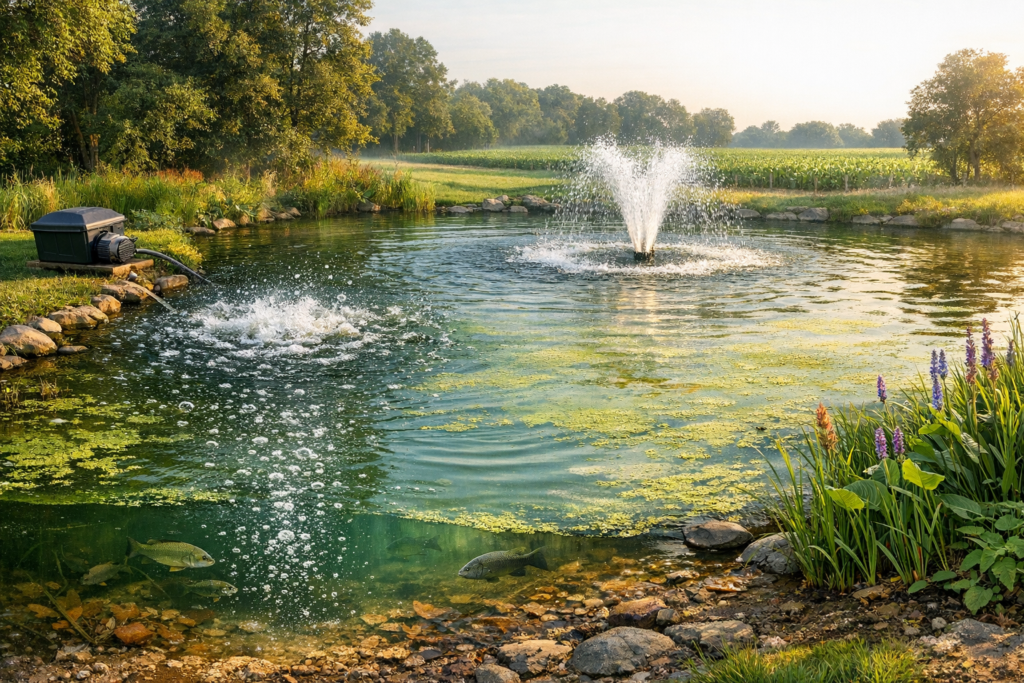
Bottom diffused aeration works by placing diffuser plates on the pond floor, connected to a shore-mounted compressor. Air is pumped to the bottom, where it rises in a column of bubbles, lifting the low-oxygen water to the surface for gas exchange. This process breaks thermal stratification, circulates the entire water column, and dramatically increases dissolved oxygen throughout the pond. For ponds deeper than six feet, bottom diffused aeration is typically the most effective choice.
Fountain and aeration systems, on the other hand, work by pumping water into the air from the surface. The spray pattern exposes water to atmospheric oxygen before it falls back into the pond. Fountains are particularly popular for recreational ponds and lakes, HOA pond management projects, and golf course water hazards because they add visual appeal while improving water quality. However, fountains primarily aerate the upper portion of the water column, so for deeper ponds, we often recommend combining fountain and aeration systems with a bottom diffused aeration unit for complete coverage.
Here is what proper aeration accomplishes:
– Increases dissolved oxygen throughout the water column
– Breaks thermal stratification that traps nutrients
– Supports beneficial bacteria that consume excess phosphorus and nitrogen
– Reduces conditions favorable for harmful algal blooms
– Improves fish habitat improvement by maintaining healthy oxygen levels
– Decreases mosquito breeding by keeping the surface in motion
– Enhances overall water clarity over time
We have installed pond aeration systems in everything from small koi ponds and water features to large East Texas lakes managed by municipalities and homeowner associations. The science behind aeration is well-documented, and the EPA’s guidance on nutrient pollution consistently emphasizes oxygen and circulation as essential tools for managing water quality.
Sizing Your System Correctly
One of the most common mistakes we see is pond owners purchasing undersized aeration equipment online without understanding their pond’s actual volume and depth profile. This is where a bathymetric survey becomes invaluable. We use depth mapping technology to create a detailed profile of your pond bottom, identifying the deepest zones, sediment accumulation areas, and optimal diffuser placement locations.
A bathymetric survey also reveals how much sediment has built up over the years, which directly informs whether dredging or sediment removal might be necessary before aeration can reach its full potential. Without this data, you are essentially guessing, and guessing leads to systems that underperform and frustration that persists.
Our pond and lake management services always begin with a thorough assessment so we can recommend the right pond aeration systems for your specific situation. Whether your property sits on a quiet rural road outside Corsicana or borders a busy commercial development, we tailor every recommendation to the unique conditions of your Navarro County TX property.
Tackling Algae and Aquatic Weeds With a Complete Management Strategy
Aeration alone is powerful, but achieving and maintaining excellent water clarity usually requires a multi-pronged approach. This is where comprehensive pond and lake care separates a temporary fix from a permanent solution. We combine biological, mechanical, and when appropriate, chemical methods into an integrated strategy that addresses the problem from every angle.
Algae Control and Aquatic Weed Control Methods
Algae control starts with understanding what type of algae you are dealing with. Planktonic algae create the classic green water effect. Filamentous algae form mats on the surface that look like green cotton candy. Blue-green algae, which are actually cyanobacteria, produce harmful algal blooms that can be genuinely dangerous. Each type requires a slightly different treatment approach.
For immediate algae control, we sometimes use EPA-approved algaecides applied at precise rates to knock back an active bloom without harming fish or other aquatic life. However, we always pair chemical treatments with long-term nutrient management strategies because killing algae without addressing the nutrient source simply guarantees the bloom will return.
Aquatic weed control follows a similar philosophy. Excessive aquatic vegetation can choke a pond, blocking sunlight, consuming oxygen at night, and making recreational use nearly impossible. We regularly encounter invasive species like hydrilla, water hyacinth, and giant salvinia in East Texas lakes and ponds. Invasive species control requires targeted herbicide applications, mechanical removal, and sometimes the introduction of triploid grass carp as a biological control agent.
Our aquatic vegetation control programs address:
– Submerged weeds that overtake the water column
– Floating vegetation that blocks sunlight
– Emergent plants that encroach on shorelines
– Invasive species control for non-native plants
– Algae blooms of all types, including harmful algal blooms
The key to successful aquatic weed control is timing. Treating weeds when they are young and actively growing produces far better results than waiting until they have taken over the entire pond. Our pond and lake maintenance programs include scheduled inspections specifically to catch problems early before they spiral out of control.
Fish Stocking and Fisheries Management
A balanced fish population plays an essential role in pond and lake restoration. Fish stocking and fisheries management is not just for trophy bass ponds, though we certainly manage plenty of those across Navarro County TX. Properly stocked ponds create a functioning food chain where bass control sunfish populations, sunfish control insects, and the overall ecosystem stays in balance.
When forage fish populations get out of control, the resulting waste and algae consumption patterns can degrade water quality rapidly. We design fish stocking and fisheries management plans based on your pond’s size, depth, forage base, and goals. Whether you want trophy bass ponds capable of producing ten-pound largemouths or simply a healthy recreational pond where your kids can catch bluegill on a Saturday morning, the stocking plan needs to match the vision.
Fish habitat improvement goes hand in hand with stocking. We install structure like spawning beds, brush piles, and artificial habitat that gives fish cover and improves spawning success. Healthy fish populations contribute to cleaner water because balanced ecosystems are inherently more stable and resistant to algae blooms.
Protecting Your Shoreline and Pond Structure for Long-Term Results
Even after you get the water clear and the ecosystem balanced, physical deterioration of the pond itself can undermine everything. Shoreline erosion control, leak repair, and sediment management are the structural components of pond and lake rehabilitation that many owners overlook until the damage becomes severe.
Shoreline Restoration and Erosion Control
Eroding shorelines are one of the most common problems we encounter in East Texas pond management projects. Waves, livestock traffic, mowing too close to the edge, and fluctuating water levels all contribute to shoreline erosion control challenges. As banks crumble, soil and nutrients wash into the pond, increasing turbidity and feeding algae. The pond literally eats itself from the edges inward.
Shoreline restoration involves stabilizing the bank using a combination of techniques. We use native vegetation plantings, riprap, erosion control blankets, and bioengineered solutions depending on the severity of the erosion and the pond’s intended use. For farm ponds and livestock ponds, we often install fencing to keep cattle from trampling the banks and recommend designated watering points instead.
Proper shoreline restoration does more than stop erosion. It also creates a natural buffer that filters runoff before it reaches the water, reduces nutrient loading, and provides wildlife habitat along the pond margins. In HOA pond management and golf course water hazards settings, attractive shoreline plantings dramatically improve the aesthetic appeal and property value of the surrounding area.
Pond Dredging and Sediment Removal
Over decades, ponds accumulate organic muck on the bottom. Leaves, dead algae, fish waste, and eroded soil all settle and decompose, releasing nutrients back into the water in a vicious cycle. This is why some ponds seem impossible to clear despite every other effort. The nutrient source is literally built into the bottom of the pond.
Pond dredging is the process of mechanically removing this accumulated sediment. We have completed dredging and sediment removal projects ranging from small backyard ponds to large commercial pond management jobs and municipal pond maintenance contracts. The difference in water quality after dredging is often dramatic because you are physically removing years of stored nutrients.
We use the bathymetric survey data mentioned earlier to determine sediment thickness, identify the worst accumulation zones, and calculate the volume that needs to be removed. Sediment removal restores depth, improves oxygen levels in the deepest zones, and gives your aeration system the full water volume it needs to operate effectively.
Pond Leak Detection and Repair
If your pond consistently loses water beyond what evaporation accounts for, you likely have a leak. Pond leak detection and repair is a specialized service that requires systematic investigation. We check dam structures, standpipes, spillways, and the pond bottom itself for seepage pathways.
A leaking pond is more than an inconvenience. Dropping water levels concentrate nutrients, expose shorelines to erosion, stress fish, and can cause complete pond failure during drought conditions. Our pond leak detection and repair process uses a combination of visual inspection, dye testing, and geotechnical analysis to pinpoint the source and implement a lasting fix.
Successful pond and lake rehabilitation requires addressing both the biological and structural health of the water body. Ignoring leaks or erosion while focusing only on water chemistry is like painting over rust. The problem will always come back.
Building a Long-Term Pond and Lake Management Plan That Works
The biggest mistake we see pond owners make is treating symptoms instead of building a system. A single algaecide treatment might clear the water for a few weeks, but without a comprehensive approach, the green will return. This is why we create customized pond management plans for every client, whether the project involves a quarter-acre backyard pond or a fifty-acre East Texas lake.
Our pond and lake management services include:
– Initial assessment with water quality testing and bathymetric survey
– Custom lake management plans with clear goals and timelines
– Pond aeration systems design and installation
– Scheduled pond and lake maintenance visits
– Algae control and aquatic weed control treatments
– Fish stocking and fisheries management programs
– Shoreline erosion control and shoreline restoration
– Pond dredging and sediment removal when needed
– Pond leak detection and repair
– Mosquito and weed control integrated into the overall plan
Whether you manage recreational ponds and lakes on a private ranch, oversee municipal pond maintenance for a city park, or need commercial pond management for a business property, the principles are the same. Identify the root causes, address them systematically, and maintain the system with regular pond and lake care.
Property value is directly tied to the condition of water features on the land. A clear, healthy pond increases land value and makes the property more attractive to buyers, guests, and residents. We have seen HOA pond management projects increase surrounding property value noticeably after a complete pond and lake rehabilitation program.
East Texas pond management requires local knowledge. The clay soils, hot summers, unpredictable rainfall, and specific invasive species common to Navarro County TX all influence how we approach every project. Cookie-cutter solutions from out-of-state companies rarely account for these regional factors, which is why our East Texas lakes and ponds expertise makes a real difference.
Your backyard pond does not have to stay green. With the right combination of aeration, nutrient management, aquatic vegetation control, structural repair, and ongoing maintenance, you can enjoy the clear, healthy water you envisioned when the pond was first built. We have helped hundreds of pond owners across Navarro County TX and beyond achieve exactly that, and we would love to help you too.
Ready to take the first step toward a permanently clear, beautiful pond? Reach out to us today at Arrowhead Pond Restoration for a free consultation. Let us build a pond and lake management plan tailored to your property, your goals, and your budget. Your pond deserves better than green water, and we are here to make that happen.